
Communication Is the Work

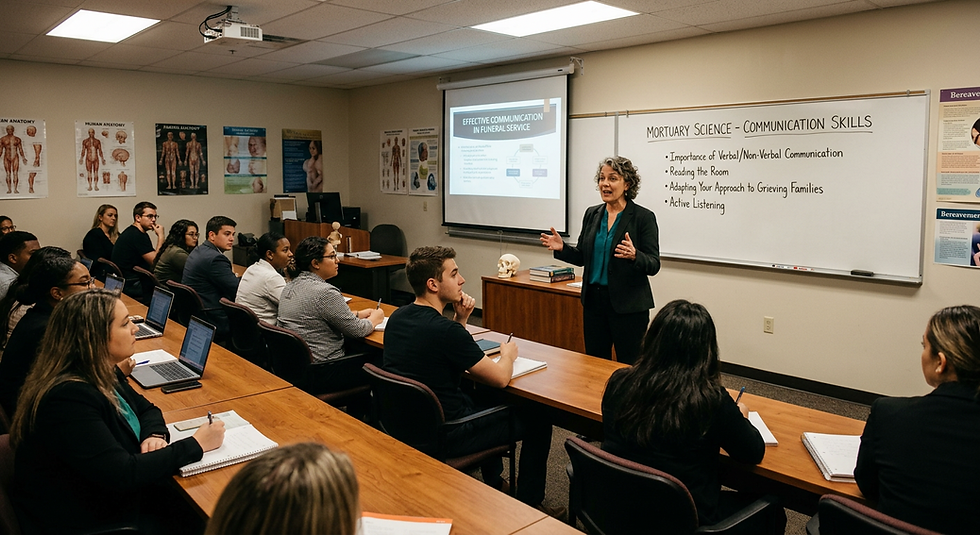
Why I Spend So Much Time Teaching Communication

There are moments in leadership when the whole room turns on a sentence.
Not a long speech. Not a polished presentation. Not a carefully crafted email.
A sentence.
A family sits across from you, carrying grief they still cannot name, and one careless phrase can make them feel processed instead of cared for. A young employee stands in your doorway, unsure how to admit they do not understand the assignment, and one impatient response can teach them never to ask again. A client calls frustrated, not because the problem is unsolvable, but because no one has listened long enough to understand what they are really asking.
I have seen it happen in funeral homes, boardrooms, classrooms, small businesses, and hospital rooms.
Communication either steadies the room or unsettles it.
That is why I spend so much time teaching it.
Because communication is the foundation of success.
Not one of the foundations. The foundation.
You can have talent, intelligence, ambition, technical skill, education, and a strong work ethic. But if you cannot communicate clearly, respectfully, and effectively, every one of those strengths eventually runs into a wall. Communication is how trust is built. It is how expectations are clarified. It is how mistakes are corrected before they become crises. It is how teams move from confusion to alignment. It is how leaders lead.
And yet, I worry that we are raising a generation that communicates constantly without always learning the art of communication.
They text all day. They email. They post, tweet, snap, message, react, and reply. Words move faster than ever. Information travels instantly. A thought can cross the world in seconds.
But speed is not the same as understanding.
A reply is not the same as a conversation.
A message is not the same as communication.
Somewhere along the way, we have mistaken communication for expression. Most of us believe the heart of communication is getting our point across. We think communication means sharing our ideas, explaining our thoughts, defending our position, or making sure others understand what we meant.
That is part of communication.
It is not the heart of it.
At its core, communication begins with listening.
It begins with the discipline of hearing the other person before preparing your response. It asks us to understand what is being said, what is being asked, and what is being communicated beneath the words themselves.
Sometimes the real message is not in the sentence.
It is in the hesitation before the sentence.
It is in the frustration behind the question.
It is in the silence after someone says, “I’m fine,” when everyone in the room knows they are not.
That kind of listening is becoming harder to teach because so many young people have grown up in a world where communication is filtered through a screen. In The Anxious Generation, Jonathan Haidt describes the shift from a play-based childhood to a phone-based childhood as the “Great Rewiring of Childhood.” His concern is not simply that young people use technology. His concern is that smartphones and social media arrived during the very years when adolescents were supposed to be developing independence, resilience, confidence, and face-to-face social skill.
The data gives weight to what many of us have been feeling. Pew Research reports that 46 percent of U.S. teens now say they are online “almost constantly,” nearly double the 24 percent who said the same in 2014 and 2015.
Let me connect some dots for you.
If young people spend less time in unstructured play, less time negotiating conflict face-to-face, less time reading body language, less time hearing tone, less time sitting with awkward silence, and less time learning how to repair a strained conversation, then we should not be surprised when they enter the workforce needing mentorship in communication.
That is not an insult to them.
It is a responsibility for us.
Many younger employees are bright, capable, hardworking, and eager to succeed. But some have not had enough practice with the ordinary conversations that build professional confidence. They may know how to send a message but struggle to make a difficult phone call. They may be comfortable replying to a text but unsure how to clarify expectations across a desk. They may know how to react quickly online but not how to pause, listen, and respond with maturity when a customer, coworker, or supervisor is frustrated.
And they are not alone.
Plenty of seasoned professionals struggle with this too. We may have grown up without smartphones, but many of us still confuse talking with communicating. We talk over people. We listen just long enough to reload our own argument. We assume we understand before we have asked enough questions. We respond to the words and miss the meaning.
Communication fails when listening becomes a waiting room for our own opinion.
That is why Crucial Conversations has shaped so much of how I think about this subject. The book defines a crucial conversation as a discussion where the stakes are high, opinions vary, and emotions run strong. That is not rare. That is daily leadership. That is business ownership. That is funeral service. That is parenting. That is mentoring. That is what happens any time something important must be said and the relationship still matters.
The authors teach that when a conversation becomes crucial, safety is often the first thing to disappear. When people feel threatened, they tend to move toward silence or verbal violence. They withdraw, avoid, mask, attack, control, or defend. The conversation may keep going, but real communication has already started to break down.
That is why listening is not passive.
Listening creates safety.
Safety allows truth to enter the room.
Crucial Learning describes two conditions that help people feel safe enough to stay in dialogue: mutual purpose and mutual respect. In plain language, people need to know two things. They need to know you care about their concerns, and they need to know you care about them.
That is communication at its best.
Not winning.
Not performing.
Not proving you are the smartest person in the room.
Understanding.
In funeral service, I learned this early. Families do not come to us because life is simple. They come when life has been broken open. In those moments, every word matters. The way you answer the phone matters. The way you explain a choice matters. The way you sit in silence matters. The way you guide someone through confusion without making them feel foolish matters.
But before any of that can happen, you have to listen.
You have to hear the question behind the question.
A family asking about price may not only be asking about money. They may be asking, “Can we honor our loved one without being ashamed of what we can afford?”
A young employee asking, “Do you want me to call them?” may not only be asking for an assignment. They may be asking, “Do you trust me to handle this?”
A client saying, “I thought this would be done by now,” may not only be complaining. They may be asking, “Can I count on you?”
If you rush to explain before you understand, you may give accurate information and still fail the person in front of you.
That is one of the great mistakes we make. We think communication improves when we become better talkers. Sometimes it does. But more often, communication improves when we become better listeners.
Better at asking.
Better at clarifying.
Better at waiting.
Better at noticing when the words and the emotion do not match.
Better at saying, “Help me understand what you are most concerned about.”
That simple phrase can change the entire tone of a conversation.
So can these:
“What would a good outcome look like?”
“What am I missing?”
“Did I understand you correctly?”
“Is this what you are asking?”
“Tell me more about that.”
Those questions slow a conversation down in the best possible way. They create room for clarity. They reduce defensiveness. They show respect. They remind the other person that they are not simply being managed, processed, or answered.
They are being heard.
And when people feel heard, they become more willing to listen.
That is one of the great paradoxes of communication. The fastest way to earn the right to speak is often to listen first.
The information points us to this truth: communication must be mentored.
We cannot criticize young people for lacking skills we have not intentionally taught.
We need to teach them how to make a phone call that builds confidence. How to write an email that is clear and respectful. How to look someone in the eye during a difficult conversation. How to ask a clarifying question instead of pretending to understand. How to disagree without becoming defensive. How to receive correction without collapsing. How to give feedback without attacking.
And above all, we need to teach them how to listen long enough for the other person to feel heard.
These are not small skills.
These are leadership skills.
The business data supports that. Crucial Learning reports that organizations using Crucial Conversations training have seen measurable improvements tied to communication, including gains in meeting productivity, safety, cost reduction, employee retention, and grievance reduction. Their reported examples include a 93 percent improvement in meeting productivity metrics at Sprint, a 55 percent reduction in safety incidents at Pride International, a turnover reduction from 30 percent to 16 percent at Rocky Mountain Equipment, and a 50 percent drop in grievances at San Antonio Independent School District.
That is why communication is not soft.
It is not extra.
It is not something we get to after the “real work” is done.
Communication is the work.
When communication improves, almost everything else improves with it. Trust grows. Frustration decreases. Expectations become clearer. Conflict becomes more manageable. People feel seen, heard, and respected.
Leadership becomes more human.
I do not believe the answer is to shame young people for the world they inherited. Many came of age in a season shaped by screens, shortcuts, remote learning, social media, pandemic isolation, and constant digital noise. They did not create that world by themselves. But they are trying to enter adulthood and the workforce inside it.
So the responsibility falls partly on us.
We need to model the communication we expect. We need to slow down long enough to explain not just what to say, but why it matters. We need to let young employees listen in on professional conversations, then debrief what they heard. We need to role-play hard calls before they have to make them alone. We need to show them how to repair a conversation when it goes poorly.
We need to teach them that clarity is kindness.
Tone carries meaning.
Silence can create safety or confusion.
Listening is often the most powerful thing a leader does.
That is why I spend so much time teaching communication.
Because communication is not about sounding polished. It is not about winning the exchange. It is not about proving you had the better argument. It is about creating connection, clarity, and trust. It is about listening deeply enough to understand what is being said, what is being asked, and what is truly being communicated.
Only then do our words have somewhere meaningful to land.
That is worth teaching.
Again and again.
Books Referenced
Haidt, Jonathan. The Anxious Generation: How the Great Rewiring of Childhood Is Causing an Epidemic of Mental Illness. New York: Penguin Press, 2024.Purchase through AmazonUsed for discussion of the shift from a play-based childhood to a phone-based childhood, the “Great Rewiring of Childhood,” and the impact of smartphones and social media on youth development. Publisher and book details verified through Penguin Random House and Amazon.
Patterson, Kerry, Joseph Grenny, Ron McMillan, Al Switzler, and Emily Gregory. Crucial Conversations: Tools for Talking When Stakes Are High. 3rd ed. New York: McGraw Hill, 2022.Purchase through AmazonUsed for discussion of high-stakes conversations, psychological safety, mutual purpose, mutual respect, silence or verbal violence, and listening-centered dialogue. Edition and author details verified through McGraw Hill.


Comments